

Dealer Admin Login Page
While some car dealership software has moved to the cloud for a monthly fees, several "on-premise" or "desktop-based" options still largely used for used car dealers who prefer locally installed databases for better control, security, or offline reliability.
Standalone Locally Installed Software Options:
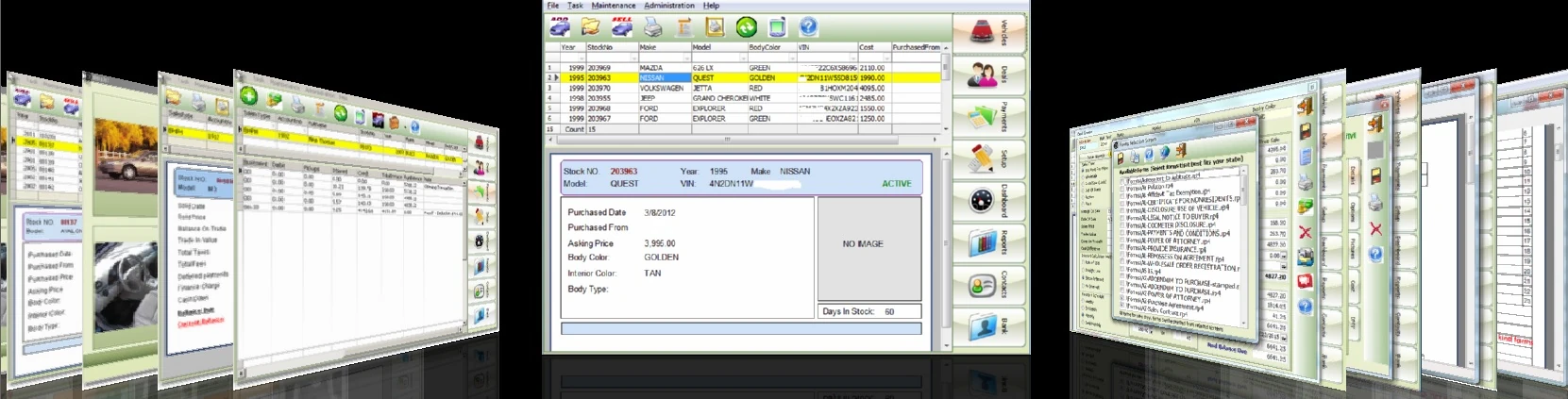
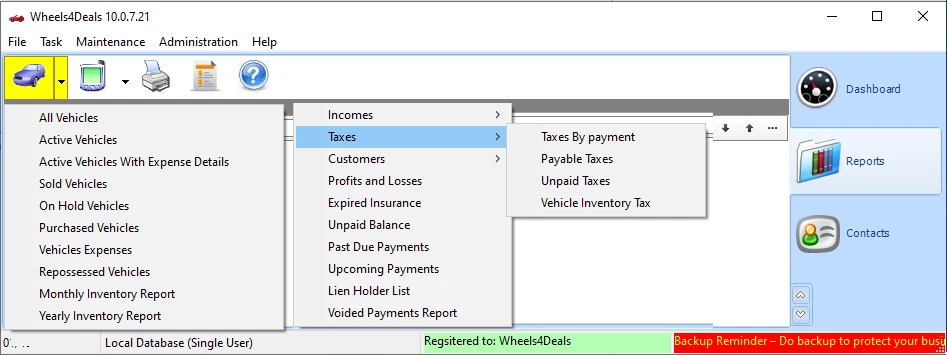
Wheels4Deals DMS ($299.00): Is one of the most widely used systems for specifically designed for small-to-medium independent dealers. While they offer a "Locally Hosted" version, their core product is a locally installed desktop application that stores data on your own computer or local server. It handles inventory management, sales processing, forms printing, and "Buy Here Pay Here" (BHPH) accounting without requiring a constant internet connection for basic operations.
4Dealership DMS ($399.00): This suite offers locally installable solutions for different dealership sizes. The 4Dealership version is specifically designed for small-to-large car lot dealers with garages and can be used as a single-user or network version for up to any number of local workstations. It includes stock management, customer vehicle data management, and financial accounting interfaces.
Both our software historically been a desktop-based DMS for used car dealers. Both are designed to work as a standalone installation on your local machine to manage inventory, deals, and F&I (Finance and Insurance) compliance locally.
Key Benefits of Locally Installed Software
• Data Control & Privacy: On-premise systems keep your sensitive customer and deal data in your own controlled environment, which can help satisfy specific local regulatory demands or personal security preferences.
• Reduced Latency: If your local network is fast, a locally installed system often performs more snappily than web-based tools, as it doesn't depend on your current internet bandwidth for every click or screen change.
• Customization: Locally hosted environments often allow for deeper customization of the software environment and integration with other local hardware (like specific printers or scanners) compared to "one-size-fits-all" cloud frameworks.